If you’re looking for ai productivity tools to get more done in less time, you’re in the right place. I’m Jimmy Kong, and I’ve been testing AI tools every single day for the past two years. Some have changed my workflow completely. Others? Total waste of time and money.
The truth is, not every AI tool lives up to its hype. I’ve tried dozens of them, and honestly, most are just repackaged versions of the same technology with flashy marketing. But there are a handful that genuinely help me finish work faster, stay organized, and actually leave my desk before midnight.
In this post, I’m sharing the ai productivity tools to get more done in less time that I actually use. No fluff. No theoretical nonsense. Just real tools that work in real workflows.

Table of Contents
- Why AI Productivity Tools Actually Matter
- AI Writing Tools That Save Hours Every Week
- Meeting and Communication AI Tools
- Smart Task Management with AI
- AI Research and Note-Taking Tools
- Automation Tools That Connect Everything
- Hardware That Complements Your AI Workflow
- Best Ai Productivity Tools To Get More Done In Less Time Tools Worth Trying
- Frequently Asked Questions About Ai Productivity Tools To Get More Done In Less Time
- Final Thoughts on Ai Productivity Tools To Get More Done In Less Time
Why AI Productivity Tools Actually Matter
Here’s what nobody tells you about ai productivity tools to get more done in less time: they’re not magic bullets. They won’t fix a broken workflow or make up for poor planning. But when used correctly, they eliminate the repetitive, mind-numbing tasks that drain your energy.
I used to spend 30 minutes every morning sorting emails, another hour writing responses, and way too much time searching through old documents. Now? AI handles the sorting, drafts most responses, and finds what I need in seconds. That’s two hours back in my day, minimum.
According to Harvard Business Review, workers using generative AI tools completed tasks 25% faster with better quality. That matches my experience exactly. The key is choosing tools that fit your actual workflow, not just whatever’s trending on Twitter.

AI Writing Tools That Save Hours Every Week
Writing takes up a massive chunk of my day. Blog posts, emails, reports, social media updates. I’ve tested every major AI writing tool, and a few have become non-negotiable parts of my stack.
ChatGPT is my starting point for almost everything. I use it to outline blog posts, draft emails, and brainstorm ideas when I’m stuck. The paid version (ChatGPT Plus) is worth every penny because it’s faster and more reliable. I’m not exaggerating when I say it saves me 5-10 hours per week.
Claude is better for longer, more nuanced content. When I need something that sounds more natural or handles complex instructions, I switch to Claude. The context window is huge, so I can feed it entire documents and ask it to analyze or rewrite sections.
Grammarly sits in the background and catches mistakes I’d otherwise miss. It’s especially useful when I’m writing fast and don’t want to break my flow. The AI suggestions have gotten significantly better over the past year.
These ai productivity tools to get more done in less time have completely changed how I approach writing. I’m not saying AI writes for me—I still do the thinking and editing—but it removes the friction that used to slow me down.

Meeting and Communication AI Tools
Meetings used to drain my entire day. Between video calls, follow-ups, and trying to remember what was actually decided, I’d lose hours. Now I use AI tools that handle most of that automatically.
Otter.ai records and transcribes every meeting. I don’t take notes anymore. I just listen, participate, and let Otter capture everything. After the call, I can search the transcript, share key points with my team, and actually remember what people said.
Fireflies.ai does something similar but integrates better with my CRM and project management tools. It automatically logs meeting notes, action items, and follow-ups. I’ve tested both, and honestly, either one works great. Pick whichever fits your existing tools better.
For email, I use Superhuman with AI features enabled. It drafts responses based on my writing style, reminds me to follow up, and surfaces important messages. Worth mentioning that it’s expensive, but if you live in your inbox like I do, it pays for itself.
I also keep an Amazon Echo Smart Speaker with Alexa on my desk for quick voice commands during calls. It’s surprisingly useful for setting timers, adding tasks, or pulling up information without breaking focus from a conversation.
Smart Task Management with AI
Task management tools have added AI features that actually make sense. I’m not talking about gimmicky chatbots—I mean features that predict deadlines, suggest task priorities, and automate recurring workflows.
Motion is the most impressive AI task manager I’ve used. It automatically schedules tasks based on deadlines, priorities, and your calendar. If a meeting runs long, Motion reshuffles everything. It’s like having an assistant who actually understands how your day works.
Notion AI has become incredibly useful for organizing information. I use it to summarize long documents, generate task lists from meeting notes, and create templates. The AI features integrate seamlessly, so it doesn’t feel like a separate tool—it’s just part of Notion.
Todoist recently added AI features that help you break down big projects into smaller tasks. It’s simple but effective. Instead of staring at “Launch new website” and feeling overwhelmed, the AI suggests logical steps to get there.
These are the ai productivity tools to get more done in less time that keep me organized without adding complexity. I’ve tried the complicated systems with 47 different tags and workflows. They don’t work. Simple, smart automation does.

AI Research and Note-Taking Tools
Research used to mean opening 50 browser tabs and losing track of everything. Now AI tools do the heavy lifting while I focus on actually understanding the information.
Perplexity AI has replaced Google for most of my research. It gives me direct answers with sources, not just a list of links. I can ask follow-up questions and dig deeper without starting a new search. For quick research, it’s unbeatable.
Mem is my AI-powered note-taking app. It automatically connects related notes, surfaces relevant information when I’m writing, and helps me find things I saved months ago. The search is genuinely intelligent—it understands what I’m looking for, not just keyword matches.
I also use ChatGPT with browsing enabled for deeper research. I’ll ask it to analyze multiple sources, compare different perspectives, or summarize long articles. It’s like having a research assistant who never gets tired.
My physical workspace includes a Logitech MX Master 3S Wireless Mouse that makes navigating between all these tools effortless. The extra buttons are programmable, so I can switch between apps or activate specific features without touching my keyboard.
Automation Tools That Connect Everything
The real power of ai productivity tools to get more done in less time comes from connecting them together. Individual tools are great, but automation multiplies their value.
Zapier with AI features has been a game-changer. I’ve set up automations that categorize emails, add tasks from Slack messages, and update spreadsheets based on form submissions. The AI-powered formatting and data extraction means I don’t have to manually map every field.
Make (formerly Integromat) is more complex but more powerful. I use it for workflows that need conditional logic or multiple steps. For example, when someone fills out a contact form, Make checks if they’re already in my database, adds them if not, sends a personalized email, and creates a follow-up task.
For running more advanced AI workflows 24/7, I’ve moved to cloud infrastructure. I wrote a detailed guide about How to Run AI Agents 24/7 on Google Cloud that explains the setup. It’s been incredibly reliable for automations that need to run continuously.
These automation tools might seem intimidating at first, but start small. One simple automation that saves 10 minutes a day adds up to 60 hours per year. That’s worth the learning curve.
Hardware That Complements Your AI Workflow
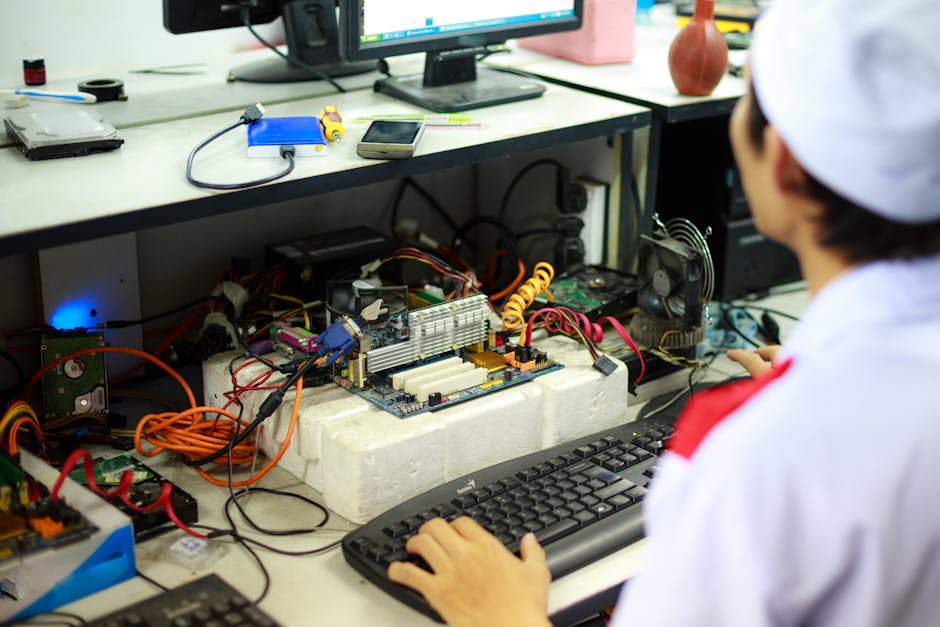
Software gets all the attention, but your hardware setup matters just as much when you’re trying to maximize productivity with AI tools. I’ve optimized my workspace over the past year, and the difference is noticeable.
A proper keyboard makes a huge difference when you’re typing all day. I switched to the Logitech MX Keys S Advanced Wireless Keyboard and immediately noticed less fatigue. The keys are quiet, responsive, and the backlighting adjusts automatically.
Connectivity is crucial when you’re running multiple AI tools simultaneously. I use an Anker 7-in-1 USB-C Hub that handles my external monitor, charging, and all my peripherals through a single connection. No more cable chaos.
For video calls and voice input (which I use constantly with AI tools), I upgraded to a Blue Yeti Nano USB Microphone. Voice commands and transcription work so much better with clear audio input. It’s also great for recording quick voice memos that I later transcribe with AI.
If you’re frequently working from different locations or need to connect multiple devices, the Anker USB C Hub (7-in-1) for Laptop is more portable and works perfectly for on-the-go productivity.
Good hardware doesn’t just make work more comfortable—it removes friction that slows you down. When everything connects seamlessly and works reliably, you can focus on actually using those ai productivity tools to get more done in less time instead of troubleshooting technical issues.

Best Ai Productivity Tools To Get More Done In Less Time Tools Worth Trying
After testing hundreds of tools and hardware options, these are the products I actually use every single day. Some are software subscriptions, others are physical tools that make everything else work better. I’ve included both because your productivity system needs both digital and physical components working together.
I’m genuinely picky about what I recommend. Every product in that table is something I reach for multiple times per day. The keyboard and mouse especially—I type and click thousands of times daily, so quality matters. The hubs keep my desk clean and everything connected. The microphone makes AI transcription actually work properly. And the Echo handles all those small tasks that would otherwise interrupt my focus.
If you’re building a productivity system around AI tools, start with solid hardware. The software is useless if you’re fighting with connectivity issues or uncomfortable equipment. For more context on setting up reliable infrastructure, check out my guide on Migrate Your Server to Google Cloud (2026), which covers the technical foundation for running advanced AI workflows.
Frequently Asked Questions About Ai Productivity Tools To Get More Done In Less Time
What are the best ai productivity tools to get more done in less time for beginners?
Start with ChatGPT for writing and brainstorming, Otter.ai for meeting transcription, and Todoist with AI features for task management. These three tools are intuitive, affordable, and deliver immediate value. You’ll see results within the first week of using these ai productivity tools to get more done in less time.
Are AI productivity tools worth the subscription cost?
Absolutely, if they save you more time than they cost. I pay about $150 per month total for all my AI tools, and they save me at least 15 hours per week. That’s more than 60 hours per month, which is worth far more than $150 of my time. Calculate your own time value and decide accordingly.
How long does it take to see results from ai productivity tools to get more done in less time?
You’ll notice small improvements immediately, like faster email responses or better meeting notes. The compounding benefits show up after about 30 days once you’ve integrated these tools into your daily workflow. Give yourself a month to properly learn and implement ai productivity tools to get more done in less time before judging their effectiveness.
Can AI tools really replace human productivity techniques?
No, and they shouldn’t. AI tools amplify good productivity habits—they don’t replace them. You still need clear goals, priorities, and discipline. What ai productivity tools to get more done in less time do is eliminate busy work and speed up execution so you can focus on thinking and decision-making.
What hardware do I need to run AI productivity tools effectively?
Most AI tools run in the browser or cloud, so you don’t need a powerful computer. However, quality peripherals make a huge difference—a good keyboard, mouse, and reliable connectivity setup will improve your experience significantly. I recommend starting with the ai productivity tools to get more done in less time hardware I listed earlier in this post.
Final Thoughts on Ai Productivity Tools To Get More Done In Less Time

The ai productivity tools to get more done in less time that I’ve shared here are the ones I actually use every single day. I’m not listing them because they’re trendy or because I think they sound impressive. They’re in this post because they’ve genuinely changed how I work and given me hours back every week.
Start small. Pick one or two tools that address your biggest time drains right now. Learn them properly. Then add more as you see results. The goal isn’t to use every AI tool available—it’s to build a system that works for your specific workflow. And if you want to dive deeper into building automated systems with AI, check out my comprehensive guide on Best AI Productivity Tools to Get More Done in Less Time. The productivity gains are real, but only if you actually implement these tools consistently.